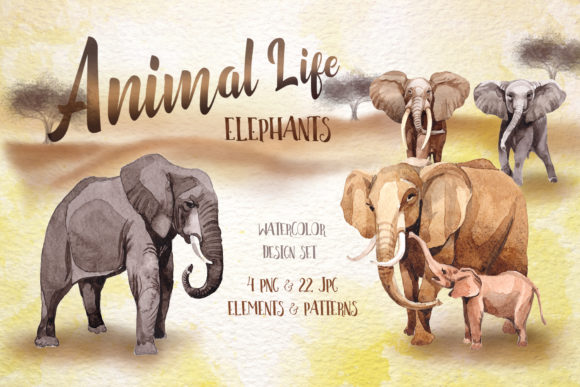
Animal Life Elephants Watercolor Set: Wild Art for Modern Projects
The Visual Character of Hand-Painted Elephant Art
When you first open the Animal Life Elephants Watercolor Set, something immediately stands out: these aren't your typical stock illustrations. Each piece carries that unmistakable warmth of hand-painted aquarelle work, where pigment bleeds softly into paper texture and brushstrokes tell a story. The set includes 26 individual files, mixing PNG isolated elements with JPG patterns and frames, all rendered at 300 dpi. That resolution matters for anyone planning to print their work, whether it's a poster for a local zoo event or a series of greeting cards sold through an online shop.
African elephants dominate this collection, and the artist has captured them with genuine personality. You'll find trunks raised in greeting, mothers walking alongside calves, and solitary bulls mid-stride. The watercolor technique gives each illustration a softness that digital vector art simply can't replicate. Colors blend naturally, with washes ranging from deep gray-blue tones to warm earth hues. Some pieces lean more toward realistic rendering, while others embrace a looser, more expressive style that feels almost impressionistic.
What makes this particular set practical is the file organization. The PNG files come without backgrounds, which means you can drop them directly into any layout without tedious masking work. The JPG patterns and frames measure 3500x3500 pixels, giving you enough canvas for large-format printing or detailed digital work. For designers juggling multiple projects, having both isolated elements and ready-made patterns saves real production time.
Where This Collection Finds Its Home
Think about the projects that benefit from organic, nature-inspired illustration. Children's book publishers reach for sets like this when they need authentic wildlife art that doesn't look computer-generated. Bloggers covering safari travel, wildlife conservation, or African culture find these illustrations add genuine atmosphere to their posts. Small business owners running Etsy shops use them for printable wall art, vinyl decals, and custom stationery.
The versatility extends further than you might expect. Wedding planners have used watercolor elephant motifs for destination wedding invitations, particularly for couples planning African-themed celebrations. Tattoo artists reference these kinds of aquarelle elements when clients want nature-inspired body art with that distinctive painted quality. Social media managers for zoos, wildlife nonprofits, and eco-friendly brands incorporate them into Instagram posts and Facebook covers to create visual consistency across campaigns.
For packaging designers working on products like artisanal teas, organic skincare, or children's toys, these illustrations bring an earthy, handcrafted feel that resonates with consumers who value authenticity. The patterns work beautifully as wrapper backgrounds, while isolated elephant elements serve as focal points on labels and tags. Educators creating classroom materials about endangered species or African geography find them equally useful for worksheets and bulletin board displays.
Working with These Design Assets in Real Projects
Here's practical advice from someone who's spent years integrating watercolor elements into commercial work: start by identifying the emotional tone your project needs. The Animal Life Elephants Watercolor Set carries a sense of gentle strength and natural wonder. That makes it ideal for brands positioning themselves as warm, approachable, and environmentally conscious. It works less well for projects requiring sharp, corporate precision or ultra-modern minimalism.
Font pairing deserves careful thought when you're working alongside hand-painted illustration. A clean sans serif typeface like Montserrat or Lato lets the watercolor art breathe without competing for attention. If your project calls for something more editorial, try pairing with a serif font that has its own organic character. Avoid overly decorative script fonts near these illustrations unless you want visual chaos. The goal is balance, where typography and imagery complement rather than clash.
Color coordination is straightforward with watercolor assets because the natural blending already contains multiple tones. Pull two or three colors directly from the illustrations using an eyedropper tool, then build your typography and layout elements around those. This creates visual cohesion without requiring advanced color theory knowledge. Most design software handles this easily, whether you're working in Adobe Illustrator, Canva, Procreate, or Affinity Designer.
Practical Considerations Before You Commit
Always test any design asset against your specific project requirements before purchasing. Download preview files if available and drop them into a rough mockup. Check how the PNG elements look against your intended background colors, since watercolor washes can appear differently on white versus dark surfaces. Review the JPG patterns at actual print size to confirm the detail level meets your standards. What looks gorgeous on screen sometimes falls short when printed at large dimensions.
Licensing terms matter for commercial projects. Read the specific usage rights included with the Animal Life Elephants Watercolor Set carefully. Most quality design asset packs allow commercial use, but restrictions on resale of the raw files themselves are standard. If you're creating products for sale, like printed merchandise or digital downloads, confirm that your intended use falls within the license. When in doubt, contact the creator directly rather than making assumptions.
Consider your project's long-term needs as well. A single watercolor set can anchor an entire brand identity if used consistently across touchpoints. The elephant motifs might appear on your business cards this month, your product packaging next quarter, and your trade show booth next year. Investing in high-quality assets with sufficient resolution and file variety pays dividends over time, especially when you need to maintain visual consistency as your brand grows and evolves across different mediums and platforms.